
Common Tree Problems In Worcestershire Gardens And When To Call A Professional
A few dead branches, mushrooms near the trunk or a tree leaning slightly can be enough to make any homeowner wonder whether something is wrong. Some common tree problems in Worcestershire gardens are relatively minor, while others can indicate decay, instability or damage that needs professional attention.
The key is knowing what you can safely monitor and what deserves a closer look. Changes such as sudden leaning, cracked limbs, root movement or large hanging branches should be assessed promptly. By contrast, isolated dead twigs or seasonal leaf changes do not automatically mean a tree needs removing.
Here are the warning signs worth watching and what to do next.
Which Tree Problems Should You Take Seriously?
As a simple rule, call a professional sooner rather than later if a tree has changed suddenly, appears structurally unstable or could injure someone or damage property if a branch or the tree itself failed.
Problems involving large branches, the trunk or roots generally deserve more attention than cosmetic changes to leaves. If a tree has fallen, partially uprooted or left large branches hanging after severe weather, keep away from it and treat the situation as potentially urgent.
1. Dead Or Dying Branches
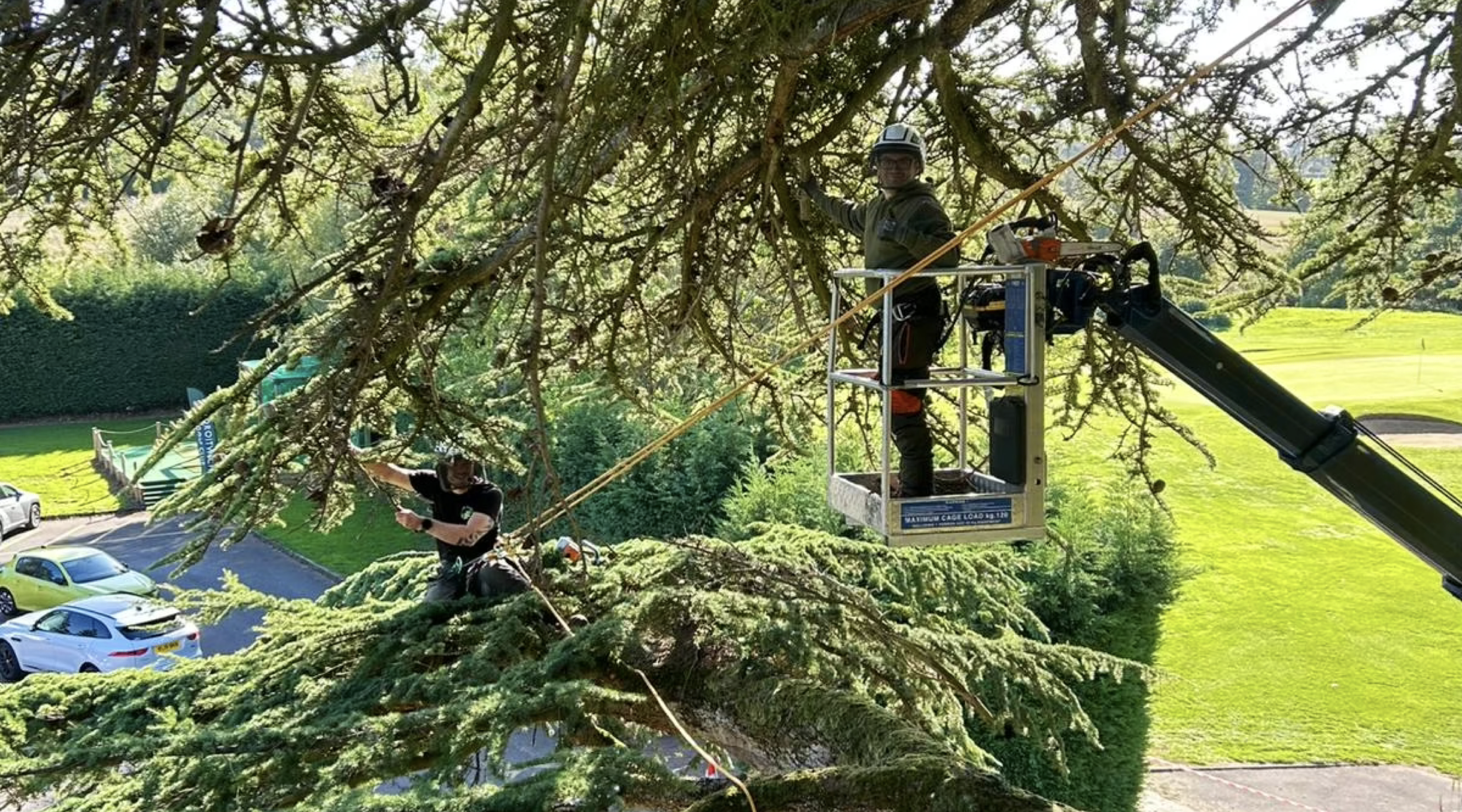
Deadwood can appear as bare branches that fail to produce leaves, brittle twigs or sections of canopy that look noticeably different from the rest of the tree.
A small amount of deadwood does not necessarily mean the whole tree is dying. Trees can lose individual branches because of age, shading, previous damage or environmental stress.
Large dead branches are more concerning, particularly above:
patios and seating areas
driveways
paths
neighbouring properties
sheds or conservatories
If significant deadwood is present, professional tree maintenance may include careful pruning or deadwood removal while retaining healthy parts of the tree.
2. A Tree Has Started Leaning
Many healthy trees naturally grow at an angle. What matters is whether the lean is new or becoming more pronounced.
Warning signs include:
freshly exposed roots
soil lifting around the base
cracking in the ground
a noticeable change after strong winds
the tree moving at root level
A suddenly leaning tree should not be assessed closely by an untrained person. Root movement can indicate instability, particularly following prolonged rainfall or storms.
3. Cracks, Splits Or Weak Branch Unions
Cracks in a major branch or trunk can affect a tree's structural integrity. Particular attention should be given to splits where large stems meet or where heavy limbs extend over frequently used parts of the garden.
Not every crack means a tree must be felled. An arborist can assess the tree's condition, the size and position of the defect and what would be at risk if failure occurred.
Where appropriate, pruning or crown reduction may reduce the problem. In more serious cases, tree removal may be recommended.

4. Fungal Growth Around The Tree
Mushrooms or other fungal fruiting bodies around a tree can worry homeowners, but fungi have many different roles in gardens.
Some simply break down dead organic material. Others can be associated with declining or decaying trees. The RHS advises that fruiting bodies are often the most visible indication of fungal activity, while some root diseases can seriously weaken trees and shrubs.
Avoid trying to identify the structural condition of a tree from a mushroom alone. If fungal growth appears directly around the base, roots or damaged trunk of a mature tree, particularly alongside canopy decline or instability, arrange a professional assessment.
5. Sparse Leaves Or A Declining Canopy
A canopy that becomes unusually thin can indicate stress, but the cause is not always disease.
Possible factors include:
drought or prolonged dry conditions
waterlogged soil
root damage
pests or disease
previous poor pruning
natural seasonal variation
Look at the overall pattern rather than one unusual branch. If decline continues between growing seasons or affects a large proportion of the canopy, professional inspection can help establish the likely cause.
6. Branches Have Outgrown Their Space
Sometimes the tree itself is healthy, but its location has become the problem.
Overgrown branches may:
touch roofs or buildings
obstruct paths and driveways
reduce clearance over roads
interfere with neighbouring gardens
block excessive amounts of light
create maintenance problems around gutters
This does not automatically justify removing the tree. Selective pruning, crown lifting or crown reduction can often manage its size while retaining it.
Professional pruning is particularly worthwhile when large branches are involved or access requires specialist climbing equipment.

7. Roots Are Causing Problems
Visible roots are normal for many trees and should not automatically be cut.
However, seek advice if you notice:
significant root damage
soil lifting around the tree
exposed or severed structural roots
movement following storms
roots affecting access or hard landscaping
Cutting major roots without understanding their role can affect tree stability and health. An arborist can assess whether the tree can be retained safely and what options are appropriate.
8. Storm Damage Has Left Broken Or Hanging Branches
High winds can expose weaknesses that were not obvious beforehand. A tree may remain standing but still have split limbs, hanging branches or movement at its base.
Do not attempt to pull down suspended branches or work beneath a damaged canopy.
If the tree presents an immediate hazard, CJ Tree Surgeons provides emergency tree surgery for dangerous and storm-damaged trees.
9. The Tree Has Become Too Large For Its Location
A mature tree can eventually outgrow a small garden without being unhealthy.
Before assuming removal is necessary, consider whether careful pruning could address clearance, light or access problems. The right option depends on the species, condition, position and desired outcome.
A professional assessment can determine whether maintenance is realistic or whether removal would provide the safer long-term solution.
10. Old Stumps Are Regrowing Or Becoming A Nuisance
A remaining stump can take up usable space, create an obstacle and, with some species, produce unwanted regrowth.
Where retaining the stump serves no purpose, stump grinding can reduce it below ground level and make the area easier to reuse.
In some cases, eco-plugging may also be appropriate. This involves inserting specialist plugs into the stump to help prevent regrowth and gradually kill the remaining root system. It can be useful where full stump grinding is not practical or where access is restricted.
The most suitable option depends on the tree species, stump size, location and what you plan to do with the area afterwards.
Before Cutting A Problem Tree, Check Whether It Is Protected
A tree being damaged, inconvenient or unhealthy does not automatically mean unrestricted work can take place.
Trees may be protected by a Tree Preservation Order (TPO), and additional controls apply to qualifying trees within conservation areas. Government planning guidance explains the legal framework governing protected trees and when consent or notice may be required.
If you are unsure, check with the relevant local planning authority or ask a professional to help establish the tree's status before work begins.
Common Questions About Problem Trees
-
Sudden leaning, root movement, major cracks, large hanging branches or significant storm damage are important warning signs. Avoid standing beneath or closely inspecting an unstable tree and arrange professional advice.
-
No. Individual branches can die while the rest of the tree remains healthy. Extensive or increasing deadwood is more likely to justify further investigation.
-
Not always. Some fungi simply break down dead material. Fungal growth around the base or trunk combined with decline, decay or instability should be professionally assessed.
-
Potentially. An established natural lean is very different from sudden movement caused by root instability. The cause and structural condition need to be assessed before deciding what work, if any, is required.
-
Arrange advice when you notice significant structural changes, large dead branches, damaged roots, progressive decline or a problem that cannot be safely inspected from ground level.
-
Do not begin routine pruning or removal without checking the relevant requirements. Protected-tree work normally requires the appropriate permission, although specific exemptions can apply in limited circumstances.
Not Sure Whether Your Tree Needs Attention?
You do not need to diagnose the problem yourself. If something about a tree has changed or you are concerned about its condition, getting it assessed can help you understand whether it simply needs monitoring, routine maintenance or more substantial work.
CJ Tree Surgeons is based in Bromsgrove and works with homeowners across Worcestershire. The team is ARB Approved, qualified and insured, with more than 225 5-star Google reviews.
Call the team on 01527 304 006

Click here to see CJ Tree Surgeons Google profile featuring a 5.0 rating and over 200+ google reviews from happy customers.