If you like being outdoors, don’t mind getting muddy, and want a career with visible results, tree surgery might be for you!

The CJ Tree Surgeons Team
What does a tree surgeon actually do?
Tree surgeons (also called arborists) work in towns, cities and countryside settings. Jobs vary massively day to day, but typical tasks include:
Identifying hazards caused by trees (for example, weak limbs over roads, footpaths, schools, buildings, or rail lines)
Climbing trees to cut back or remove branches
Cutting down and removing trees and grinding stumps
Planting trees and assessing their health
Producing basic tree survey reports with clients
Using machinery competently and leaving sites tidy and safe
National Careers Service also highlights this role as a “green job” because managing tree health supports the environment.
What’s the job really like?
It’s physical, it’s technical, and it can be intense. Working conditions can include:
Outdoors in all weathers
Working at height
Dusty environments
Physically demanding work
Sometimes weekends or short-notice call-outs
Typical hours are around 40 hours a week, and the National Careers Service lists an average salary range of around £25,000 (starter) to £35,000 (qualified). Though a senior experienced climber, specialist, business owner or sub-contractor can expect to earn a lot more.
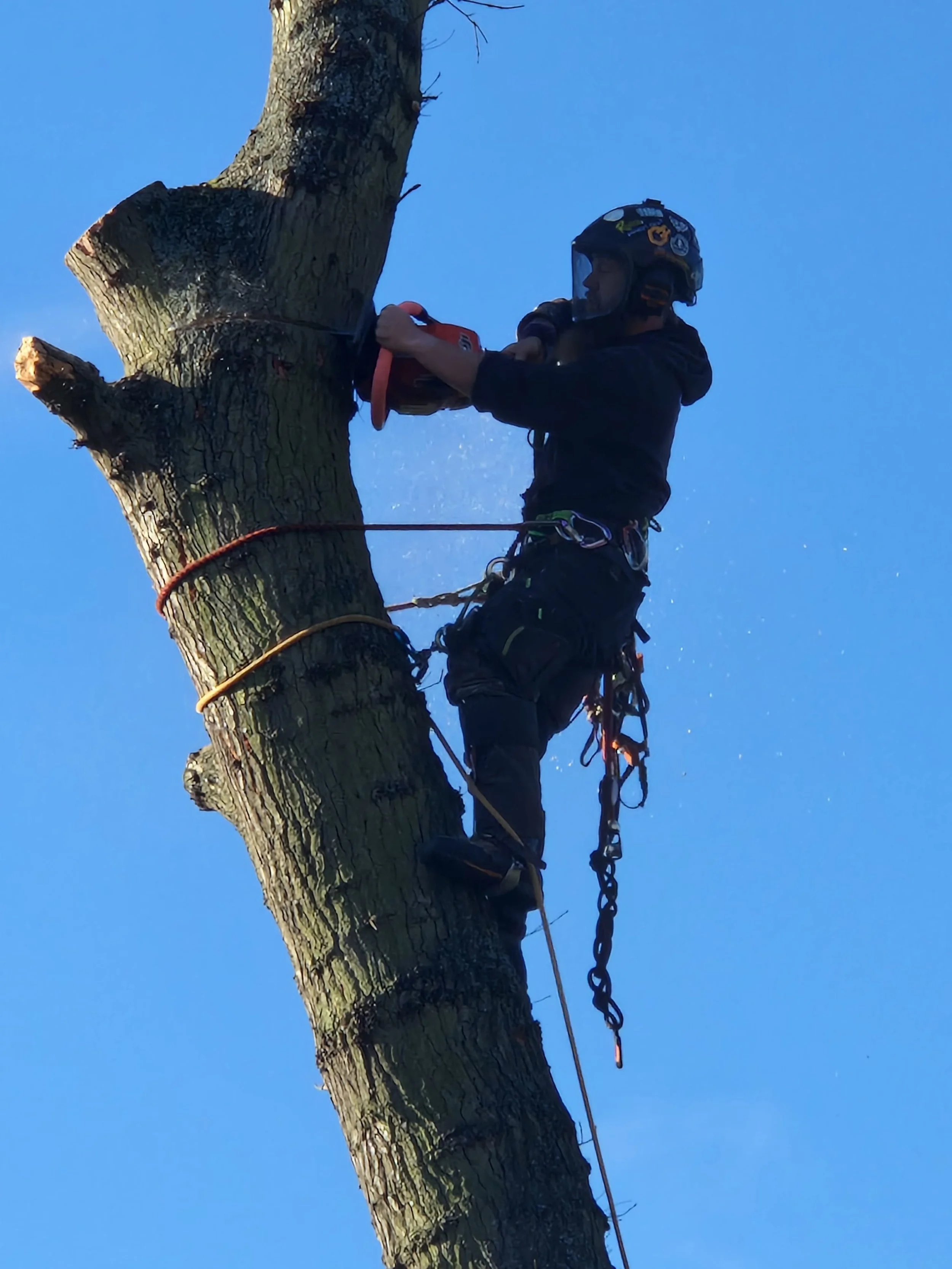
Ian, a specialist sub-contractor climber, is regularly used by CJ Tree Surgeons
How do you become a tree surgeon?
There isn’t just one route. Here are the four common pathways:
1) Apprenticeship
A popular route is an arborist apprenticeship. These typically take a minimum of 2 years and combine on-the-job training with off-site learning.
Entry requirements vary, but can include some GCSEs (often including English and maths) for intermediate level, and typically 5 GCSEs (grades 9-4) including English and maths for advanced level.
2) College course
Relevant subjects include arboriculture, forestry and arboriculture, and related land-based programmes (including the T Level in Agriculture, Land Management and Production).
3) University route
Some people take a foundation degree, HND or degree in areas like forestry, arboriculture, countryside management, forest management, or woodland ecology and conservation.
4) Work your way up literally
You can start as a forest labourer or groundworker, supporting a qualified tree surgeon. Over time, you build skills and complete further training on the job, including building up a library of tickets on chainsaws use, manual handling and wood chipper training.
This route is very common and it teaches you how real sites run: safety, teamwork, rigging, clean-up, equipment checks, and the pace of commercial work.
Do you need qualifications?
Tree work can be dangerous, so training matters. As previously touched on, you will need to obtain certificates (commonly referred to as ‘“tickets”) on various tools and machinery before being allowed to use them on site.
You will start with basic tickets as a groundsman and build experience before progressing into climbing and more advanced work.
Getting experience before you apply
If you’re not ready to jump straight in, volunteering can be a great start to familiarise yourself with working around trees. You can contact local companies to see if they have any volunteering opportunities or enquire with organisations such as The Tree Council, Forestry England, and the Woodland Trust.